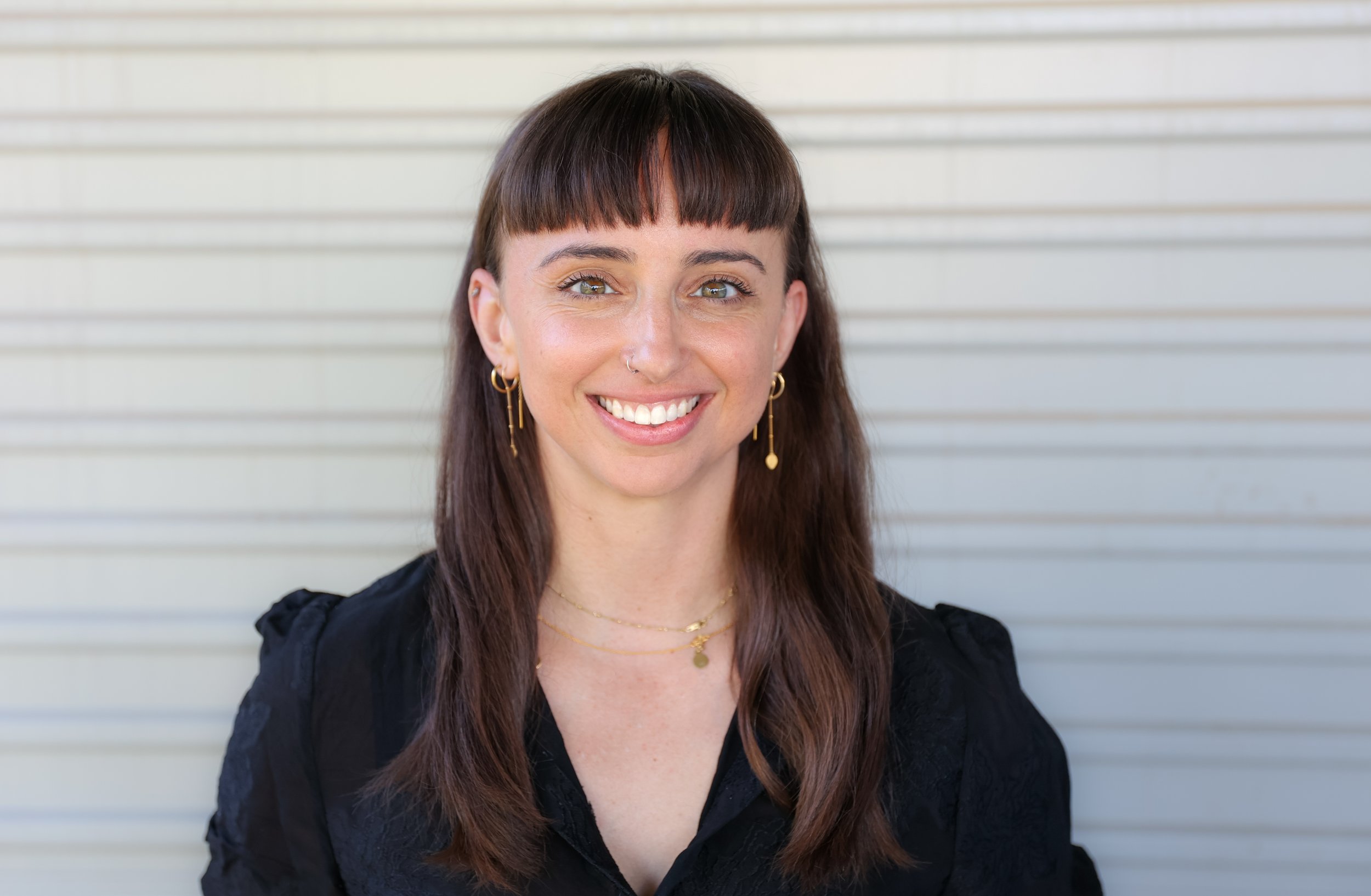
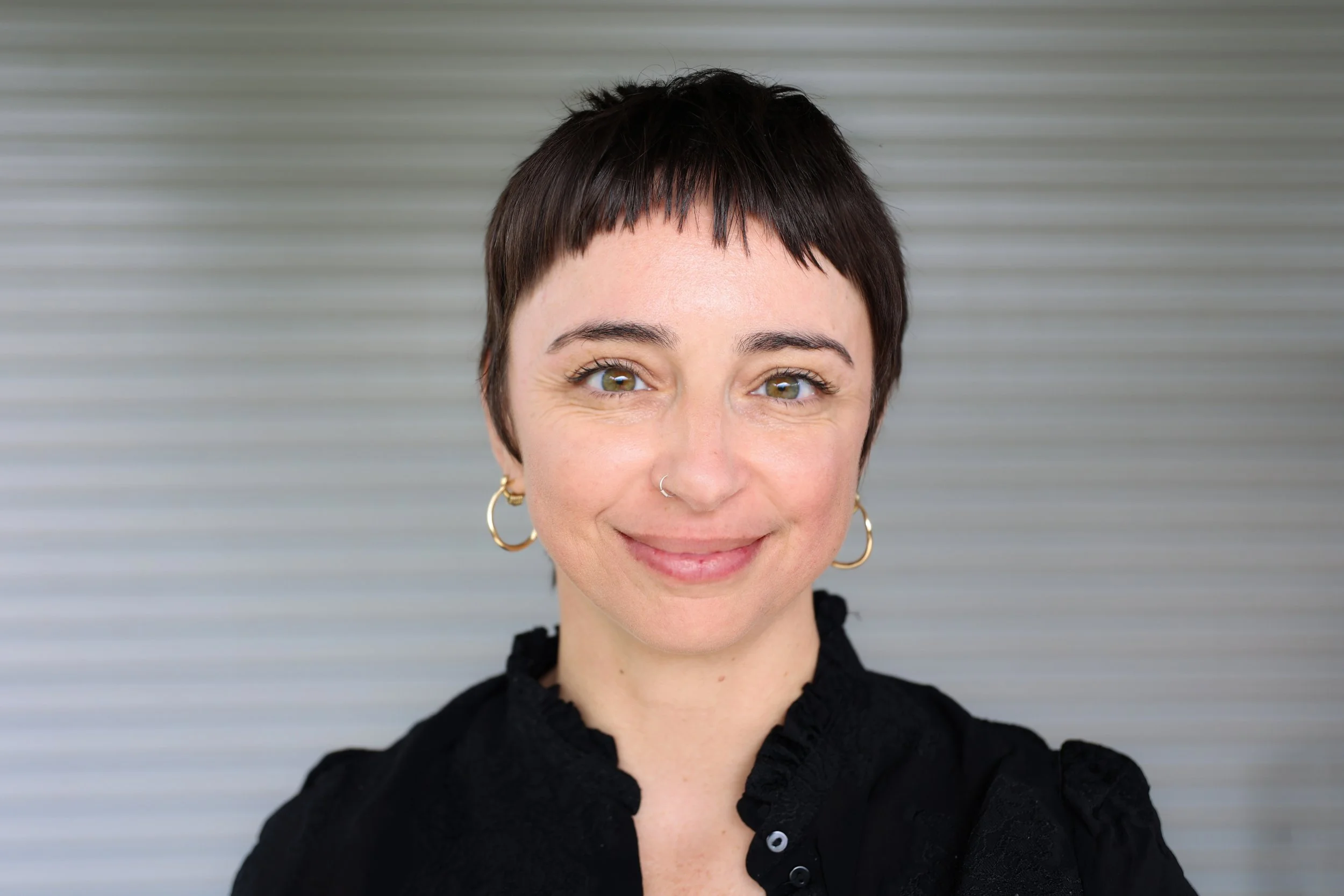
EMMA FISHWICK
Boorloo based choreographer Emma Fishwick has an interdisciplinary practice that works across movement, digital media, writing, textiles, and academic scholarship. Emma has worked extensively across Australia and abroad, lectures in Politics of Dance, Choreography, and is an Honours supervisor at Western Australian Academy of Performing Arts (WAAPA). In 2024, Emma completed her PhD research, Slow Choreographies, which addressed everyday sexisms in Australian universities through embodied creative methods.
In 2026, Emma designed set for A Cure 4 Loneliness at the Blue Room Theatre, AV design for Lost and Found Opera’s The Trial and became the digital editor for arts publication Seesaw Magazine. In 2025, Emma was a recipient of a Minderoo Artist residency, selected for the ATLAS choreographic program, Vienna, created the AV design for Yirra Yaakin 7 Stages of Grieving and created marathon, O, marathon for Sydney Dance Company’s New Breed Season. In 2024, Emma choreographed and performed What Came Before with Serena Chalker as part of STRUT Dance RESTORE program and developed her full-length work From Here, Together with producers Performing Lines WA. In 2022, Emma was selected for Co3 Australia’s In Residence Program and received the award for OUTSTANDING NEW WORK | Slow Burn, Together at the 2022 Performing Arts WA Awards. This work was commissioned by Perth Festival in 2021 and was performed to present her work at His Majesty’s Theatre, Karboordup. Other notable works include and Again (2023), Dance, Quiet Riot (2018), and microLandscapes (2016). Between 2018-2023 Emma was a member of the STRUT Dance Board and has been a mentor for artists with a disability via disability support provider, My Place.
Emma’s choreographic practice has grown into a conversation with a sprawling lineage of influences that echo sporadically through the body, thought, and material. Emma’s practice often questions whether dance can achieve the often-complex connections between the human and non-human, challenging her understandings of the form through incorporating multiple mediums/practices. This perspective on making has leant itself to a practice intimately entwined with research, process, and adaptability so the work can be in response to the times we live and move in.